Mold Remediation After Water Damage in Jeffersonville, IN
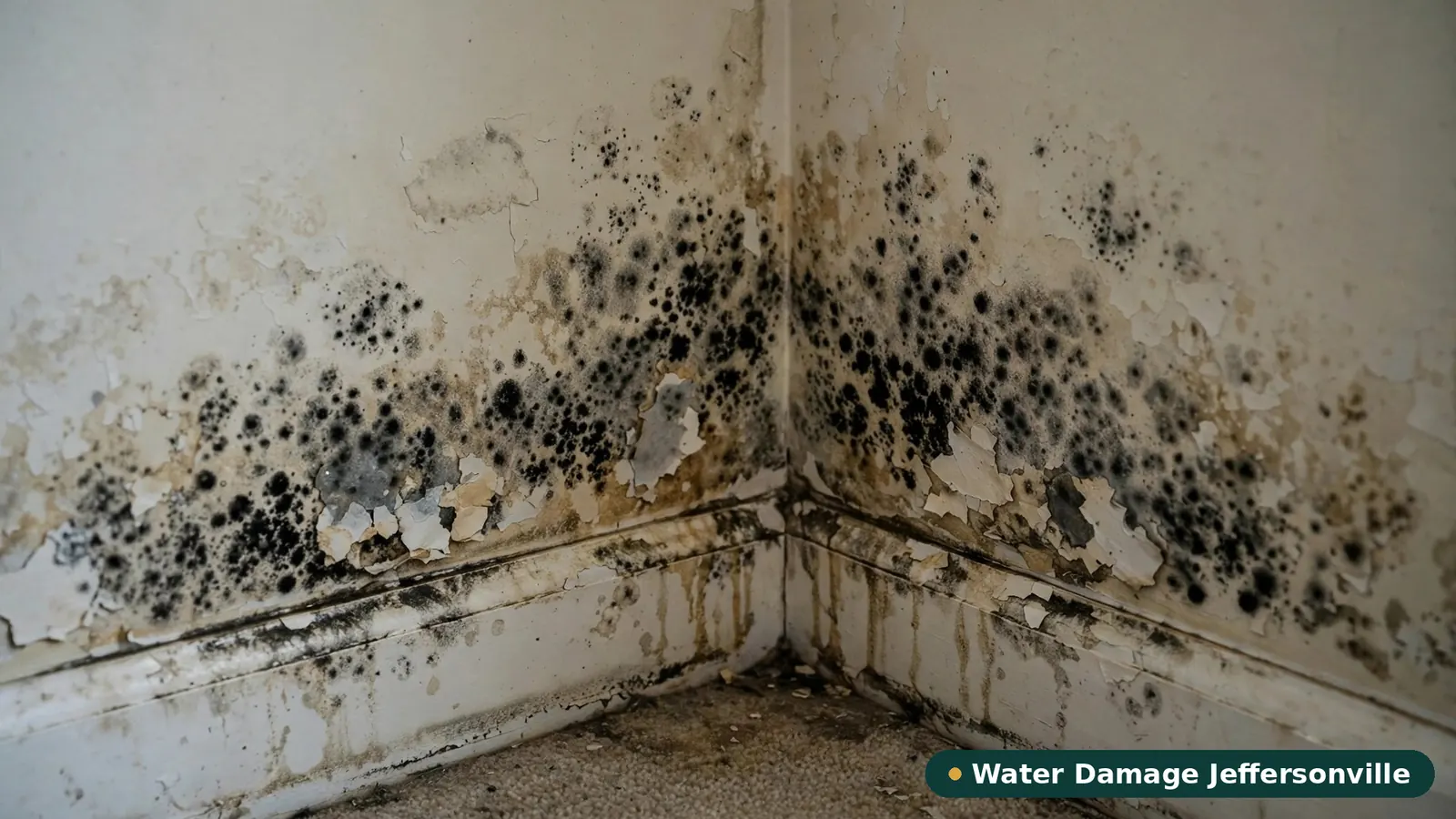
Mold remediation in Jeffersonville, IN starts with the moisture behind the mold. Seeping basement walls, damp finished lower levels, slow leaks and humid Ohio Valley summers all feed mold here. Our crew contains the area, removes contaminated materials, cleans what can be saved and dries the structure so the problem stays gone.
Why Mold Shows Up in Jeffersonville Homes
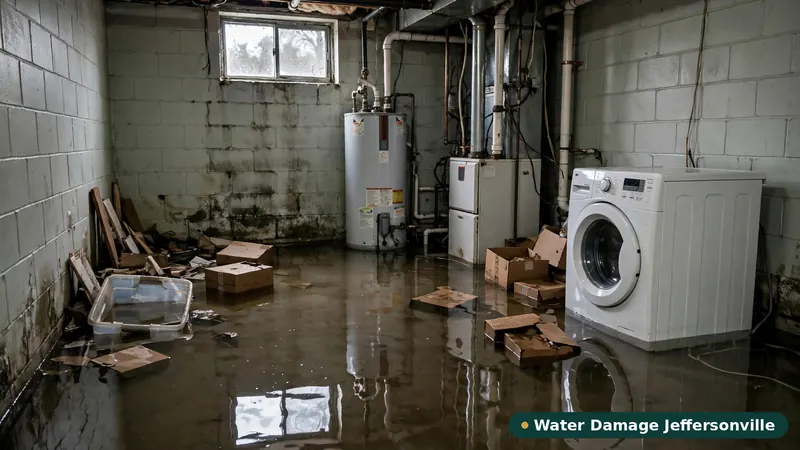
Jeffersonville's spot on the Ohio River makes mold a year-round possibility. Groundwater keeps basement walls and floors cool and damp, especially during wet winters and springs when the river runs high. Humid Ohio Valley summers then add moisture to that cool basement air, and it condenses on walls, ducts and stored belongings. Many homes also have finished lower levels where carpet, drywall and insulation sit right against concrete, giving mold plenty to feed on.
We find mold most often in these places:
- Behind finished basement drywall, on the back of the paper and in insulation against foundation walls
- Under basement carpet and pad after seepage or a sump pump failure
- On floor joists and the underside of the subfloor in unfinished basements and crawl spaces
- Around water heaters, furnaces and laundry areas
- In bathrooms without proper exhaust fans
- In attics after storm-related roof leaks
Do I Need Professional Mold Remediation in Jeffersonville?
The bottom line: if mold covers more than about 10 square feet, is hidden behind finished basement walls or in ductwork, followed sewer or flood water, or anyone in the home has asthma or a weakened immune system, call a professional. Per EPA guidance, a homeowner can usually handle growth smaller than about 10 square feet; larger or hidden growth needs containment and a fix for the moisture source.
Our Mold Remediation Process in Jeffersonville
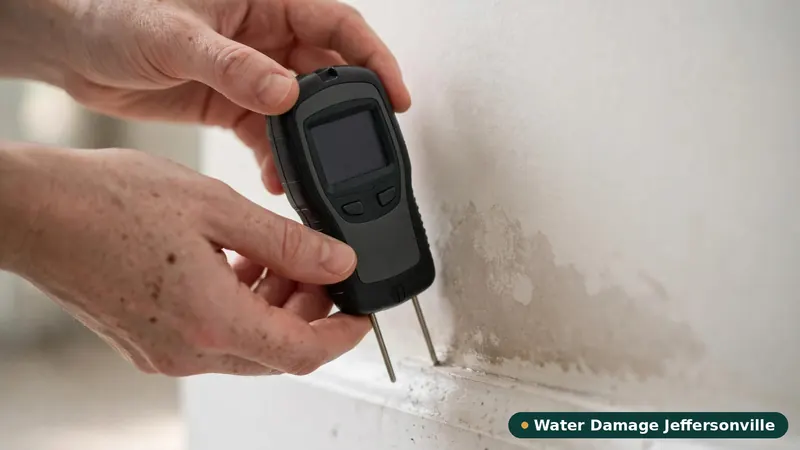
- Step 1: Inspect and find the moisture. We look for visible growth, use moisture meters and thermal imaging behind finished walls and identify the water source.
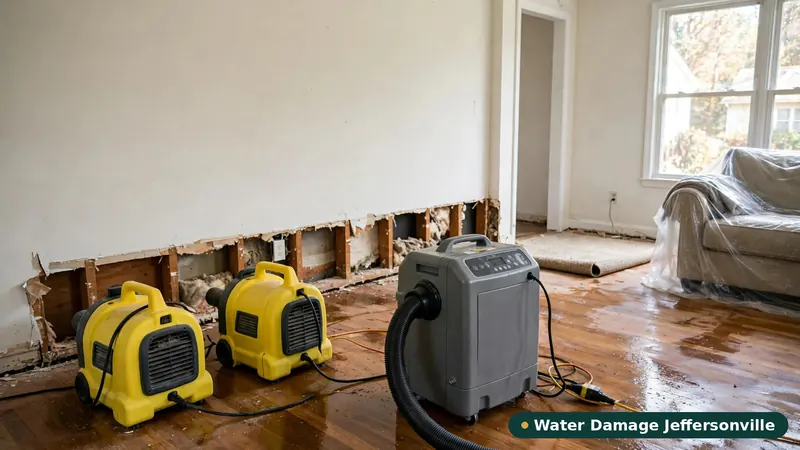
- Step 2: Contain. Plastic barriers seal off the work zone, and HEPA-filtered negative air machines keep spores out of the rest of the house.
- Step 3: Remove contaminated materials. Moldy drywall, insulation, carpet and pad are cut out and bagged.
- Step 4: Clean what can be saved. Framing, concrete and block are HEPA-vacuumed and scrubbed, and wood with surface growth may be sanded.
- Step 5: Treat. An EPA-registered antimicrobial is applied to cleaned surfaces.
- Step 6: Dry and fix the cause. Dehumidifiers bring materials back to normal moisture, and we address seepage, leaks or humidity.
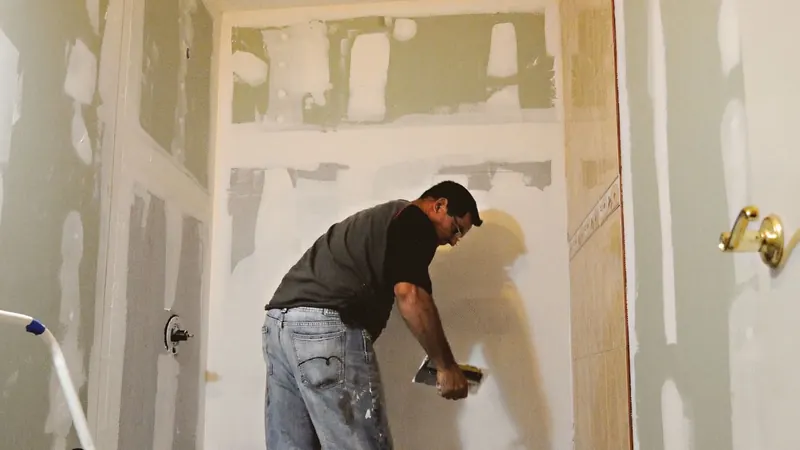
- Step 7: Verify and rebuild. We confirm readings, remove containment and rebuild.
Hidden Mold in Finished Basements Around Jeffersonville
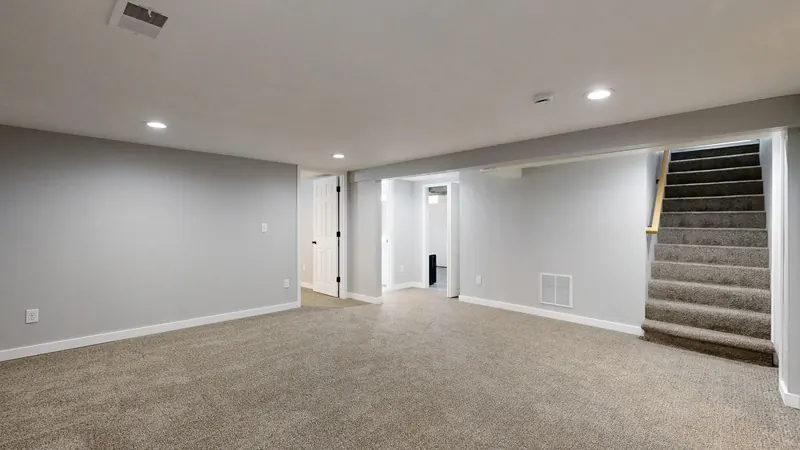
Finished basements in Oak Park, along Hamburg Pike and in newer subdivisions toward Utica and Sellersburg are where we find the most hidden mold in Jeffersonville. The usual pattern: a small leak or seepage event gets mopped up, the carpet feels dry in a few days, and everyone moves on. Behind the drywall, though, fiberglass insulation pressed against the cool foundation wall stays damp, and the bottom plate of the wall sits on wet concrete. A few weeks later, a musty smell shows up.
Remediating a finished basement means opening walls where readings show moisture, removing wet insulation and moldy drywall, cleaning the framing and drying everything before walls are closed back up. When we rebuild, we can suggest moisture-tolerant materials that make the space more forgiving next time.
Keeping Mold Out of Your Jeffersonville Basement
- Run a basement dehumidifier set around 50 percent from spring through fall, ideally draining to the sump or a floor drain.
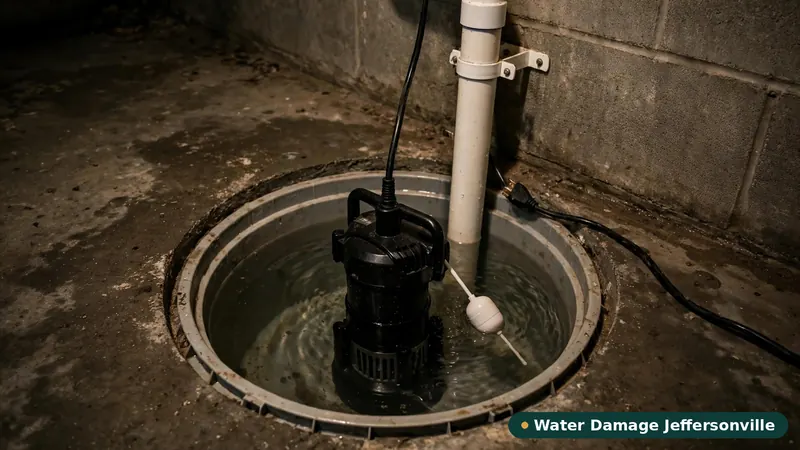
- Keep the sump pump working and add a battery backup.
- Extend downspouts and keep gutters clear so the soil around your foundation stays drier.
- Use closed-cell foam board or moisture-tolerant materials if you refinish basement walls.
- Keep stored items in plastic bins on shelves, not in cardboard on the floor.
- Make sure bathroom fans vent outdoors and run them during and after showers.
- Fix leaks the day you find them, and call for drying when water reaches drywall, carpet or framing.
When Mold Testing Helps in Jeffersonville Homes and When It Does Not
Many people's first instinct is to order a mold test. Sometimes that is the right call. Often it is not needed, because the mold you can see and the water problem behind it already tell you what to do.
- Visible mold: if you can see it and you know the water source, testing usually adds little. The mold needs to be removed and the moisture fixed either way.
- Musty smell, no visible mold: testing or an inspection with moisture meters can help find hidden growth behind walls or under floors.
- Health concerns: if someone in the home has asthma, allergies or a weak immune system, testing can help guide decisions with their doctor.
- After remediation: clearance testing by an independent inspector can confirm the work is complete, which can matter when selling a home.
- Real estate deals: buyers in Jeffersonville sometimes ask for testing when a basement shows past water damage.
Water Damage Jeffersonville focuses on fixing moisture and removing mold the right way: containment, careful removal, HEPA cleaning and drying. If testing makes sense for your situation, we will tell you why.
Mold Remediation in Jeffersonville, IN at a Glance
Short answer: mold remediation removes mold safely and fixes the moisture behind it, using containment, HEPA air filtration, removal of affected porous materials, cleaning and drying. In Jeffersonville, finished basements and damp cellars are the most common trouble spots.
- Small patches: the EPA says many homeowners can clean areas under about 10 square feet.
- Larger growth or health concerns: call a professional.
- Never paint over mold.
- Keep basement humidity under 50 percent.
Water Damage Jeffersonville starts every mold job by finding the moisture. Our leak detection tools help find hidden leaks.
Preventing Mold After a Jeffersonville Flood or Backup
After floodwater or a sewer backup reaches a Jeffersonville home, mold is almost certain to follow if cleanup is slow. Flood mold prevention starts with what you remove and how you clean.
- Remove porous materials that floodwater touched, such as drywall, insulation, carpet and pad.
- Clean hard surfaces with detergent and water first, then disinfect.
- Dry the structure fully before any new material goes in.
- Keep humidity low with dehumidifiers, not just open windows.
- Check hidden spaces like wall bottoms and cabinet bases.
Water Damage Jeffersonville treats flood cleanup and mold prevention as one job, so the space is clean and dry before anything is rebuilt.
Attic Mold in Jeffersonville Homes: Bathroom Fans and Winter Condensation
Not all mold in Jeffersonville homes starts in the basement. In winter, warm, humid air from bathrooms and kitchens can rise into a cold attic and condense on the roof sheathing, where mold grows quietly for months.
- Bathroom fans that vent into the attic instead of outside are a common cause.
- Gaps around light fixtures and attic hatches let moist air leak up.
- Dark spots on the underside of the roof near the eaves are a warning sign.
- Frost on nails in the attic on cold mornings means moisture is building.
- Fixes include venting fans outdoors, sealing air leaks and improving attic ventilation.
Water Damage Jeffersonville can check attic moisture and point out where fans or insulation need attention.
Mold Remediation FAQs for Jeffersonville, IN
The mold questions Jeffersonville homeowners ask us most.
Will bleach get rid of basement mold?
Bleach can lighten mold on hard, non-porous surfaces but does not penetrate drywall, wood or carpet backing, and the water in it can feed regrowth. Porous materials with mold growth are better removed and replaced. Never mix bleach with ammonia or other cleaners.
Can I stay home during mold remediation?
Usually yes. Containment and negative air keep the work zone sealed from the rest of the house, and basement jobs rarely disrupt daily life upstairs. Anyone with asthma, allergies or a weakened immune system should ask their doctor whether to stay elsewhere during the work.
Does Indiana homeowners insurance cover mold?
It depends on the cause. Mold resulting from a sudden covered loss, like a burst pipe, may be included, often with a limit. Mold from long-term seepage, humidity or maintenance issues is usually excluded. Check with your agent, and we will document the source and how far the water spread.
Will the mold come back?
Not if the moisture source is fixed and basement humidity stays controlled. Spores are always present outdoors, so the goal is a home dry enough that mold cannot grow. Every job ends with moisture fixes and final readings.
Start Mold Remediation in Jeffersonville Today
If you see mold, smell it or know water sat too long, containing it quickly keeps it from spreading into the rest of your home. Our Jeffersonville crew can inspect, contain, remove and fix the moisture behind it.
Humid Ohio Valley summers and finished basements make a perfect setup for mold in Jeffersonville. It hides behind basement drywall after a seepage problem, under carpet pad, inside closets on outside walls and in attics above leaking roofs. Water Damage Jeffersonville finds the moisture source, sets containment, removes the growth and dries the area so it stays gone.
Water Damage Jeffersonville serves Jeffersonville 47130, Clarksville, New Albany, Sellersburg, Utica, Charlestown and nearby Clark County.